


I’m working on my book about the history of probability and statistics and sharing a few interesting snippets from it. For frequent updates, follow me on X.
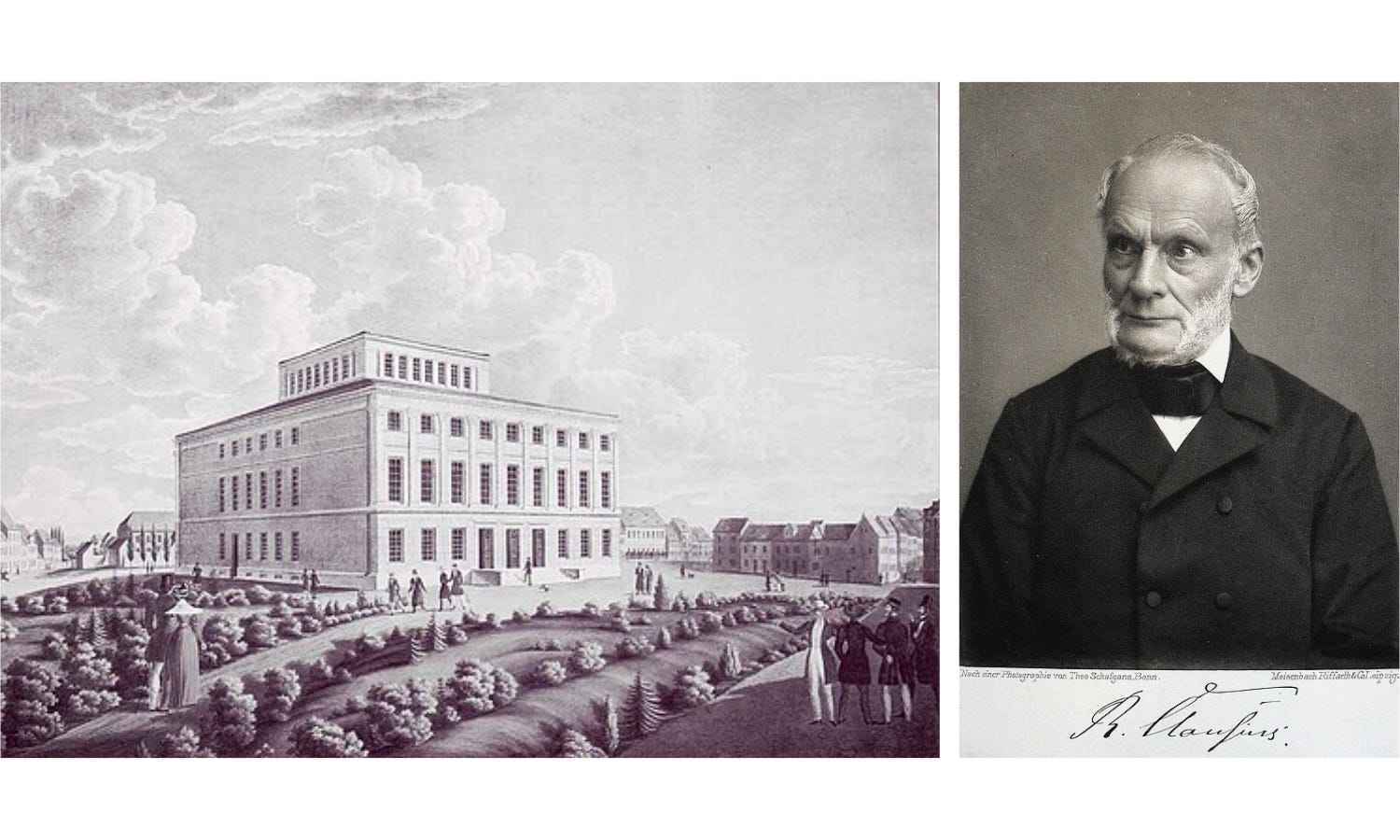
Rudolf Clausius was the first to give entropy a rigorous mathematical foundation in the 1850s and formally introduced the term in 1865. Before his work, thermodynamics was a collection of empirical observations about heat and work, useful but conceptually loose. Clausius introduced entropy as a measurable state function, capturing how energy spreads out and becomes less available for doing work, and expressed the second law of thermodynamics in a form that remains standard today. He showed that the increase of entropy was not a vague tendency but a quantifiable requirement built into the behavior of physical systems, reflecting the second law’s statement that natural processes move toward states of higher entropy.
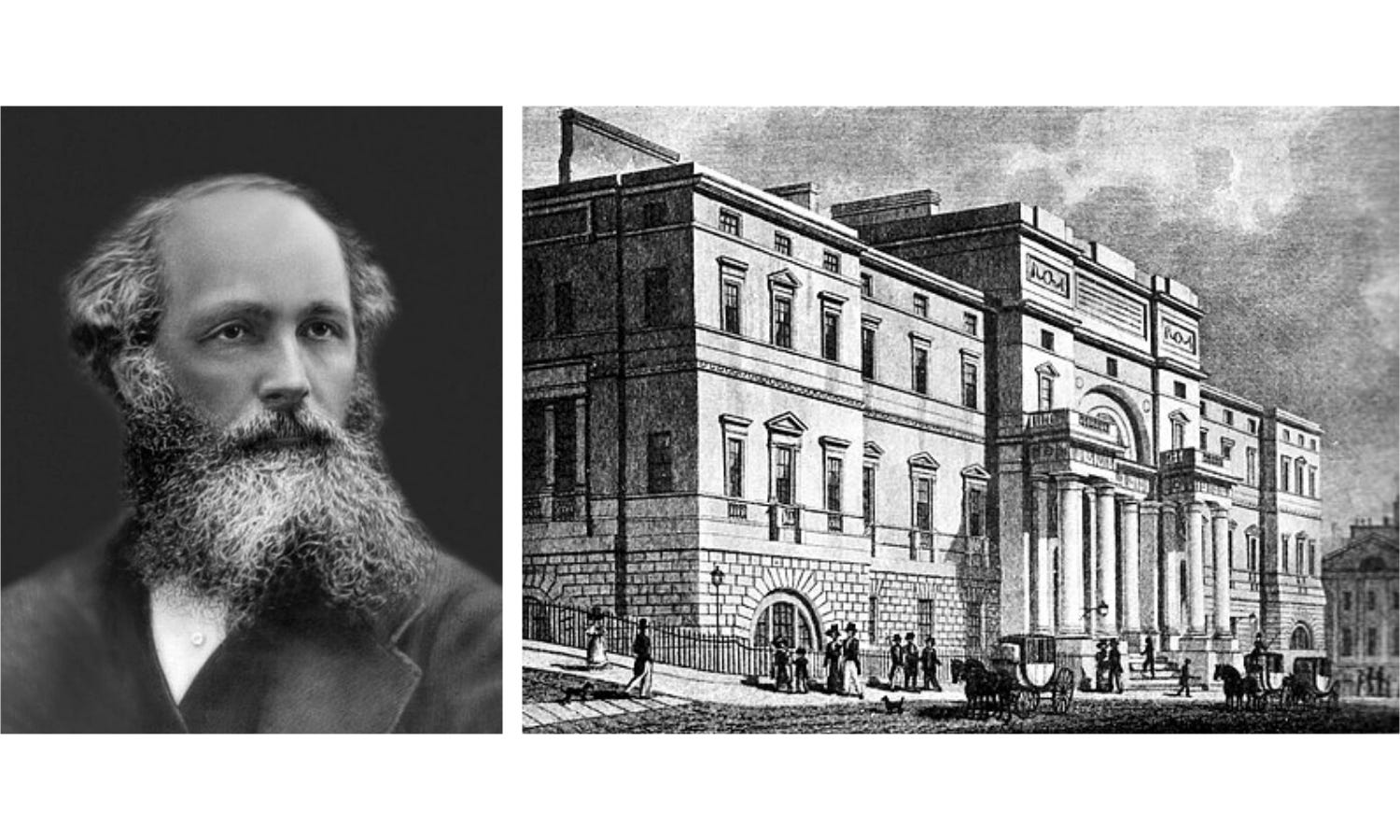
James Clerk Maxwell brought probability directly into physics in 1859. Instead of trying to track the motion of individual molecules, he asked what distribution of speeds must exist in a gas at equilibrium. This shift was profound. Maxwell demonstrated that randomness could be treated mathematically and that probability could produce precise, testable predictions. His speed distribution was the first probabilistic law in physics and showed that microscopic chaos could give rise to stable macroscopic behavior.
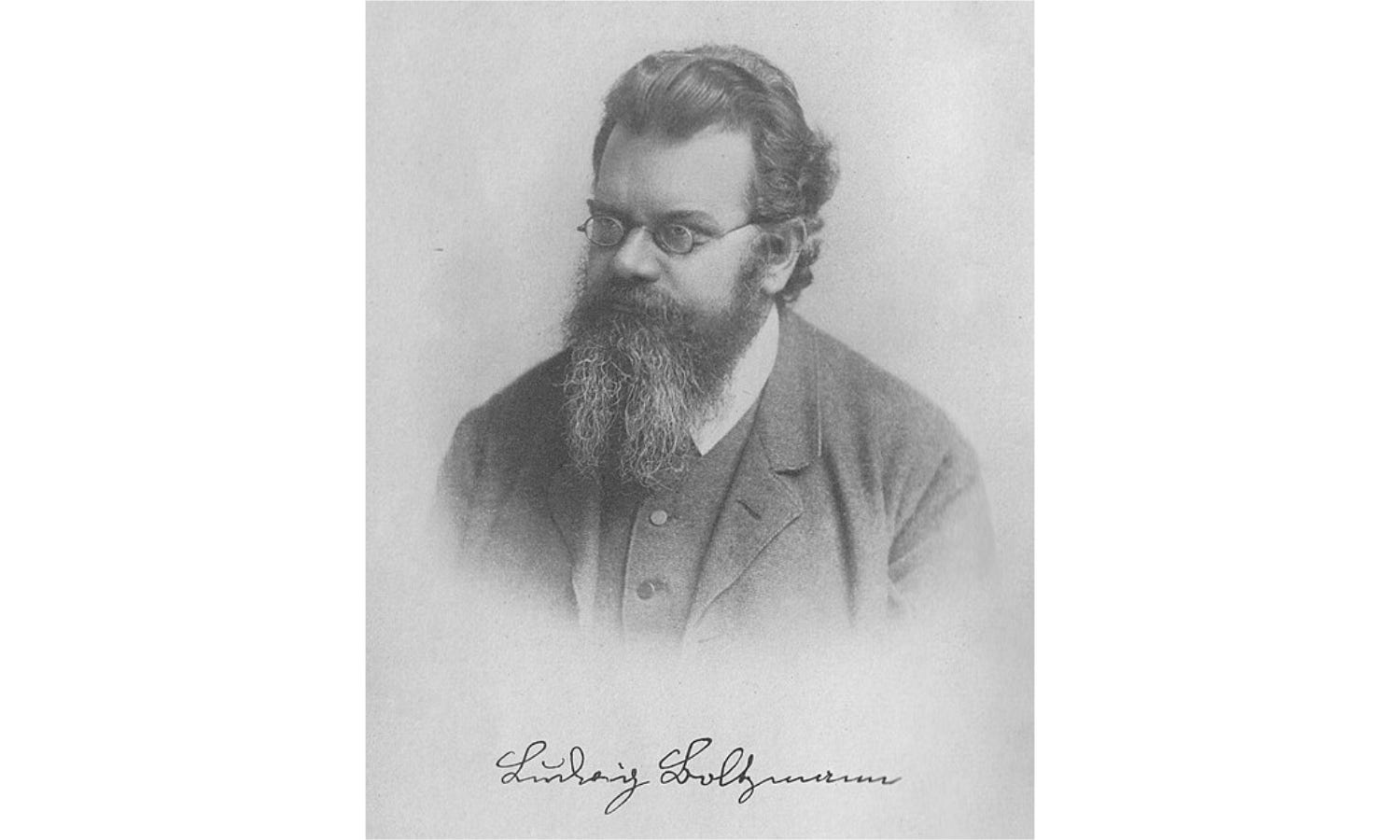
Ludwig Boltzmann transformed entropy into a statistical quantity in the 1870s. He connected the thermodynamic behavior of matter to the number of microscopic configurations available to it. This was a conceptual revolution. Entropy became a measure of multiplicity, of how many ways matter can be arranged while still producing the same macroscopic state. Boltzmann uncovered the core relationship between entropy and probability, later codified in the famous formula written as S = k log W, which captures the essence of statistical mechanics in a single expression. In this formula, entropy increases whenever the number of accessible microscopic configurations increases (W), with k serving as the proportionality constant, linking macroscopic irreversibility to microscopic multiplicity.
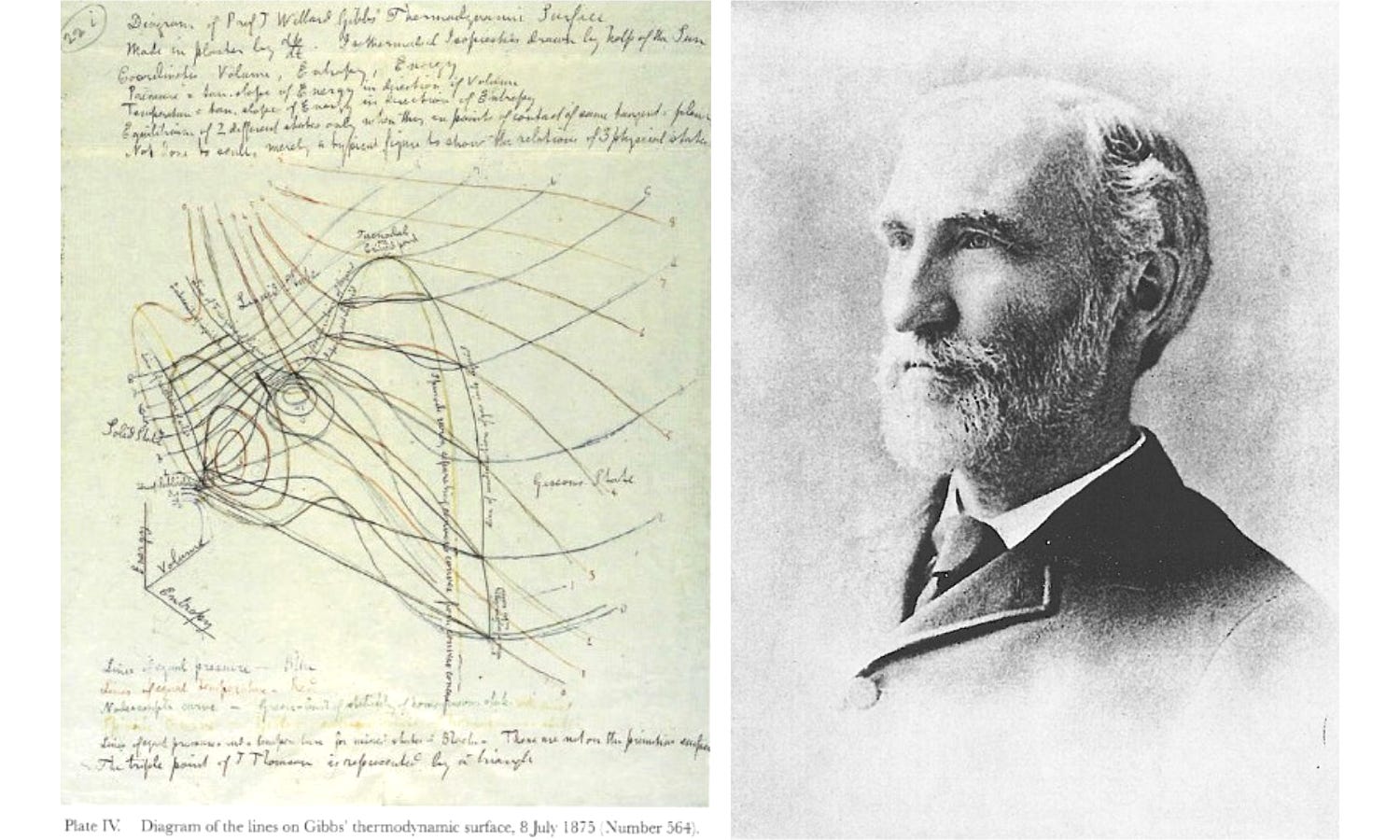
J. Willard Gibbs provided the mathematical framework that unified these ideas at the turn of the 20th century. He introduced ensembles, abstract collections of systems representing all possible states consistent with given constraints. Gibbs showed how thermodynamic quantities could be derived from probability distributions over enormous spaces of microscopic configurations. His ensemble theory gave statistical mechanics its modern form and made it possible to compute equilibrium properties, phase transitions, and thermodynamic potentials with clarity and generality. Gibbs did not simply refine the field. He gave it the structure that still underlies every modern treatment of statistical physics.
The development of statistical mechanics is one of the clearest examples of how probability quietly entered physics. It did not arrive through a single breakthrough. It emerged through a sequence of thinkers who were willing to rethink what physical law means and how order arises from underlying disorder. Their work gradually shifted physics away from strict determinism and toward a deeper recognition that probability is woven into the structure of nature.
More updates soon as the manuscript continues to take shape. All images are in the public domain via Wikimedia Commons.